Aligning with State Medicaid Priorities is a Winning Strategy for MCOs
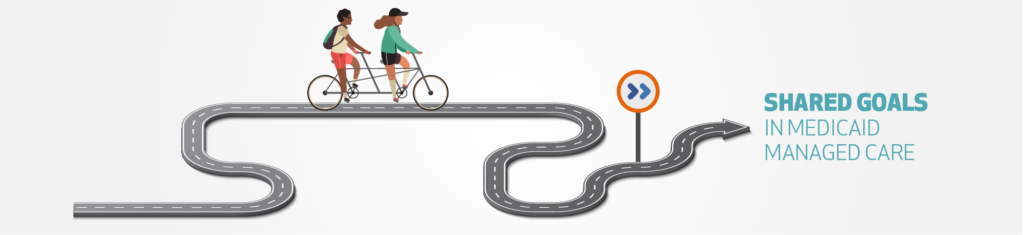
State Medicaid agencies often find themselves balancing immediate priorities and long-term goals. It can be a tough juggling act. MCOs are not able to assist with every issue facing state Medicaid agencies. However, when MCOs are able to align their goals with those that their state Medicaid agency is working to achieve, MCOs will achieve greater success as an organization.
MCOs must meet and/or exceed their state Medicaid agency’s contract requirements, but focusing on current contract requirements alone can limit an MCOs strategic position with their state partners. Understanding your state Medicaid agency’s larger priorities, and better aligning your long-term goals with theirs, can also help MCOs more rapidly pivot with well-developed programs when the time is right. Examples of this approach, discussed below, include health equity and redetermination, two issues facing all states and MCOs at this time.
State Medicaid priorities for MCOs to address
The COVID-19 pandemic and the immediate need it has created for Medicaid member support has overshadowed many state Medicaid agencies’ longer-term initiatives. The pandemic has also shined a stronger light on how critical it is to address population health and health equity, which have been goals for most state Medicaid programs for some time.
State Medicaid agencies are now asking their MCO partners to commit to innovations that will move the needle on health equity and social issues. Medicaid programs are shifting from traditional medical management requirements to programs focused on removing barriers caused by social determinants of health (SDOH), improving access, and transitioning to fee-for-value cost of care models that better serve their complex and vulnerable populations and providers. The managed care experts at Sellers Dorsey have reviewed state managed care RFPs and letters of direction to MCOs and identified seven major areas for MCOs’ program development:
1. Addressing disenrollment and benefits. States’ Medicaid agencies have stopped disenrollment during the COVID-19 public health emergency, but states will have to resume their Medicaid eligibility renewal process once the emergency ends. This process will affect nearly 80 million people and is expected to have an impact on those same vulnerable populations that have experienced greater harm throughout the pandemic. This will be a key opportunity for MCOs and Medicaid agencies to work together to make that process go as smoothly as possible and to minimize the loss of coverage for vulnerable and complex communities.
2. SDOH affects access, outcomes, and cost. COVID-19 has highlighted the impact of SDOH in countless ways, from higher rates and severity of illness to lower rates of vaccination that can be directly tied to certain social determinants.
3. Reimbursement and policies aimed at increasing health equity, access, and value. State Medicaid agencies will be looking for new strategies to increase coverage and access to affordable care that directly address the roots of health inequity.
4. Reimbursement and data requirements reflecting SDOH. There is debate in the industry about who should bear the cost of identifying and mitigating SDOH. With appropriate funding, community-based organizations and MCOs can implement SDOH screening measures and interventions that help capture critical data around gaps in care and develop a clear picture of the cost for these services.
5. Behavioral health integration. Improved access and outcomes in behavioral health care and substance use disorders has been a longstanding priority, however the tremendous increase in mental health issues as a result of COVID-19—and the barriers to care—has made this issue more critical.
6. Enhanced member engagement through care coordination. Coordinating across public health agencies has become a key strategy for driving up rates of COVID-19 testing and vaccinations. MCOs might expect to see requirements for care coordination and the need for sharing data across state organizations in future contracts as a strategy for driving desired member outcomes.
7. Expanded access through increased use of technology, such as telehealth. Although health care providers have been evaluating a greater role for telemedicine and telehealth for more than a decade, the COVID-19 pandemic has brought it to the forefront through the relaxation of a patchwork of state and federal laws. Lawmakers are looking at how to make the flexibilities permitted during the pandemic permanent. MCOs should focus on implementing programs that strengthen access to care, including behavioral health, through telehealth for vulnerable or underserved communities.
These state Medicaid program priorities are reflected in MCO procurements and enhanced contract requirements. Recognizing these priorities and the complexity that lies ahead, MCOs should begin preparations for an RFP well in advance of its release. This may include tapping into external resources for help with RFP strategy, capture planning, and writing, as plans may not have all of the necessary expertise or capacity to pivot rapidly in the face of evolving Medicaid priorities.
Strategies to move these priorities forward
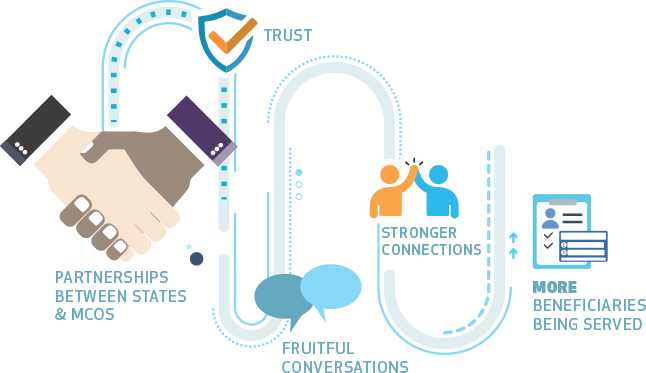
MCOs should work more closely with state Medicaid agencies to create the right vehicles for achieving mutual goals. Executives of MCOs may find their meetings with state Medicaid directors, or key members of the director’s team, to be an excellent opportunity to discuss strategy for aligning programs with where the state Medicaid agencies aim to move, while building stronger, trust-based relationships.
These meetings may also be an opportunity for MCOs to share the impact of programs and best practices. MCOs might consider encouraging team members to document stories about the individuals or families they’ve supported to help Medicaid directors and staff connect with specific community needs. These connections can not only help MCOs address their needs and negotiate program challenges but also help Medicaid agency leadership see the value of their MCO partners. MCOs and Medicaid agencies operate in different ways, and part of a relationship is learning to understand how each party works and what they need to thrive.
Sellers Dorsey can help MCOs find opportunities, create solutions, and strengthen Medicaid Managed Care Programs. We work with state agencies, providers, managed care organizations, and administrative support organizations across the nation to provide strategic advice, technical assistance, and relationship management. We help achieve goals where business and policy intersect in managed care service delivery systems.