As final rules and state decisions arrive, these areas will demand the most attention from hospital teams.
Hospital leaders have been working within the H.R. 1 framework since it became law last year, including its roughly $1 trillion reduction in projected federal Medicaid spending over the next decade. Hospital finance, patient access and government affairs teams are already modeling scenarios and coordinating with health plans and state associations to mitigate the impacts.
What makes the coming months difficult is how much arrives at once and how much remains unsettled. CMS estimates that its proposed May rule on state directed payments (SDPs) would reduce federal spending by $510 billion over ten years, more than triple the $149.4 billion that the Congressional Budget Office (CBO) estimated for the statute’s SDP provisions alone.
The effects are compounding, with coverage losses increasing uncompensated care costs just as SDP limitations reduce the Medicaid payments that help offset them. The CBO estimates 10 million more uninsured people in 2034, and CMS estimates the community engagement requirement alone could disenroll 15% of affected beneficiaries.
The dates are set. The details are uncertain.
- Jan. 1, 2027: Medicaid expansion adults renew coverage every six months, and most must meet an 80-hour-per-month community engagement requirement unless exempt.
- Jan. 1, 2027: The CMS chief actuary begins certifying Section 1115 budget neutrality under more restrictive guidance.
- October 2027: New provider taxes are prohibited, and the permissible threshold begins phasing down in expansion states.
- 2028: Grandfathered SDPs begin phasing down toward Medicare-based limits. CMS’s proposal would extend Medicare-based caps to all non-grandfathered SDPs, set at the individual service and provider level.
With these changes in mind, here are five areas hospitals can pressure-test in your 2027 planning:
- Refining scenario models
Scenario models are underway at most finance offices. Making them decision-grade typically requires coverage scenarios (baseline, moderate churn, and severe churn) by payer and service line, with payment scenarios for SDPs, disproportionate share hospital payments, and provider-tax-funded payments layered on top. Exposure to SDP cuts varies widely by state. In a Health Affairs analysis, SDPs above the new limits averaged 12.5% of Medicaid spending nationally and exceeded 30% in some states.
- Keeping eligible patients covered
Most projected losses are procedural, which makes this one of the areas where hospitals can meaningfully influence the outcome.
Clinicians will be asked for supporting documentation to substantiate medical frailty exemptions, so designating an owner for fast turnaround is worthwhile. Nebraska, an early enforcement state, checks claims data first and automatically exempts people with qualifying conditions, making complete diagnosis documentation a coverage issue as well as a clinical one.
- Strengthening your position in managed care contracts
A useful starting point is a map of every payment that depends on an SDP, a supplemental arrangement, or a quality metric, with an owner for each, and service-line margins re-run under the new limits. Payer scorecards covering denials, timeliness, quality incentives, and administrative burden strengthen a team’s position heading into renewal. Plans face rate-setting uncertainty of their own, which is already straining participation in fragile markets. The strongest contract positions include shared data on denials and quality performance, joint design of value-based and directed-payment arrangements, and multi-year terms that give both sides more predictability.
- Deciding in advance what to protect
Leaders know which services are most exposed when margins tighten, including trauma, emergency psychiatric, and substance use disorder care. Agreeing on triggers with hospital leadership before a mid-year shortfall makes those decisions more deliberate. It is also worth monitoring neighboring hospitals, since demand shifts to the hospitals that remain when others close service lines.
- Engaging states and plans while the rules are still moving
Most legislatures convene in January, and the SDP final rule is still pending. Hospital-level numbers tend to carry more weight with policymakers than general warnings, so sharing modeled impacts, including reductions in programs and services, through the state hospital association is a constructive step.
Keeping the work connected
None of this requires starting from scratch. Most hospitals already have the necessary pieces: finance, patient access, case management, contracting, and government affairs. The coming year will test even well-prepared organizations, and some answers will not arrive until after budgets are set. Hospitals that build their plans now with added flexibility, despite these uncertainties, will be better positioned to sustain operations and protect access for the people they serve.
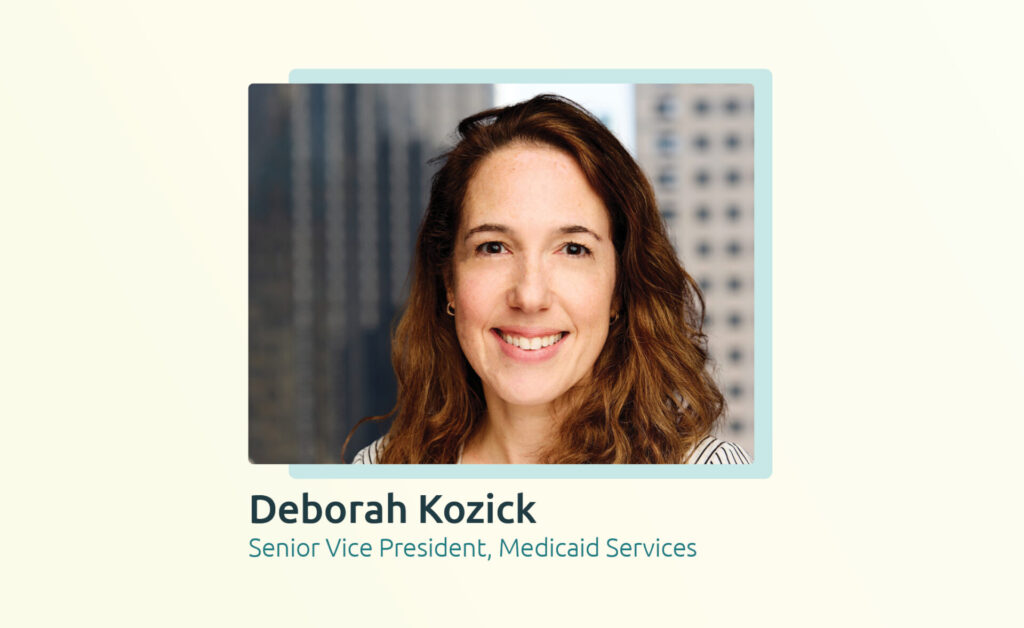
Deborah Kozick is senior vice president of Medicaid services at Sellers Dorsey.